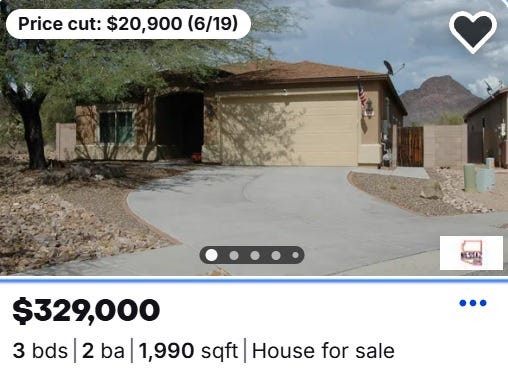
My son is house-hunting in Tucson, AZ, and I’m watching with interest.
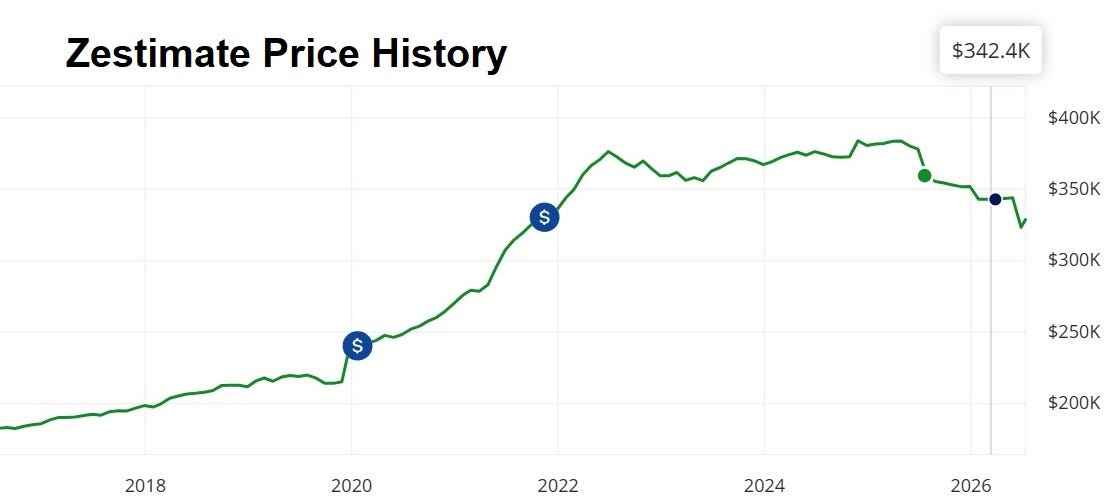
Right now, that housing market is a strange combination of prices that peaked at around twice 2018 levels and recent, sometimes notable price cuts. A couple of representative Zillow graphics:
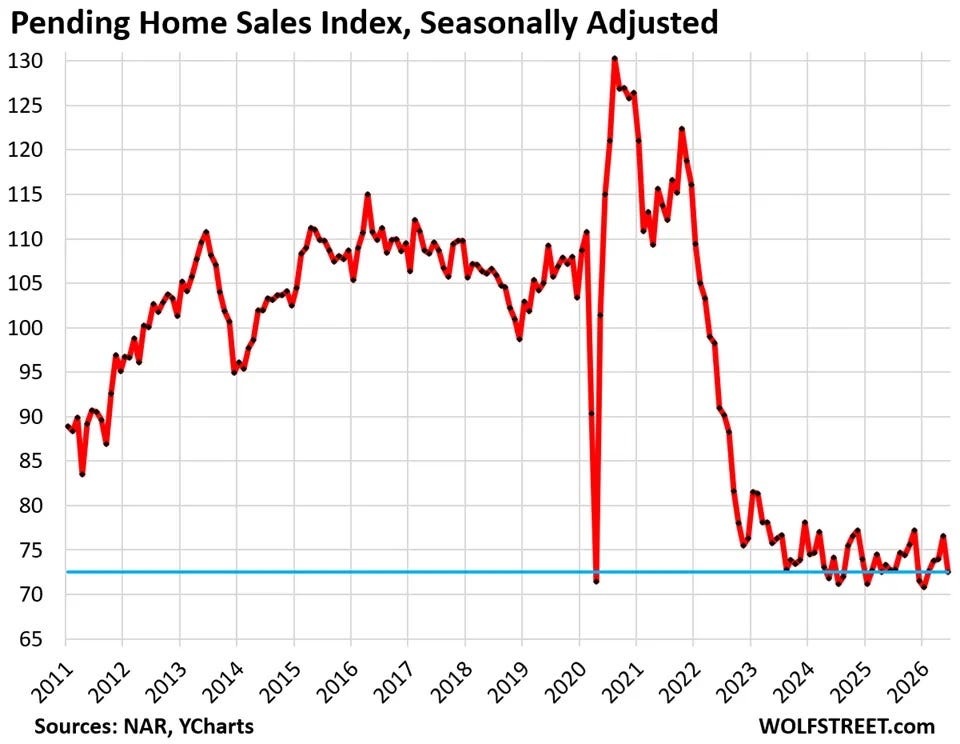
Pending home sales plunged by 5.4% in June from May, seasonally adjusted, to the lowest level for any June on record, down 0.3% from the abysmally low levels in June last year, down 36% from June 2021, 37% from June 2020, 34% from June 2019, 32% from June 2018, and down 20% from June 2011, during the Housing Bust, according to data from the National Association of Realtors. Its data only goes back to mid-2010.
A new Federal Reserve survey offers a somber look at how young Americans are getting by: a lot with their parents’ help, from paying a phone bill to even living at home.
The data comes from the Fed’s Report on the Economic Well-Being of U.S. Households, which found that 49% of adults ages 18 to 29 live with their parents, and another 47% of adults in that same age group received help from someone outside their household to pay an expense—money toward a cell phone bill, general living expenses, or housing costs. Notably, those aren’t the same population, according to Laura Ullrich, director of economics at Indeed Hiring Lab, who has studied household formation trends for years.
“You’ve got to think about this as a Venn diagram,” Ullrich told Fortune. “Forty-nine percent of them are living at home. 47% of them are getting help from someone outside their household, which doesn’t include those living at home. There’s a lot of adult children getting financial support from their parents.”
When people stay at home longer or have roommates at older ages, it delays the ages at which they marry, have children, buy homes, and more. This demographic shift also impacts housing markets, school enrollment, and retirement ages.
The Inevitable Price of Inflation
It all comes back to fiat currencies: When a country piles up too much debt and responds by inflating away its money, life’s necessities are priced beyond the reach of a growing number of citizens. It’s not random chance, and it shouldn’t be a surprise. It’s just the inevitable result of this particular policy mistake.
As for my son, I’m advising him to make aggressively low bids while houses reprice back to 2020 levels.


No nation can continually violate the laws of economics without consequences.
Aggressively low bids. Hilarious. I can see the snarling-lady realtors, and the shocked faces of the owners.